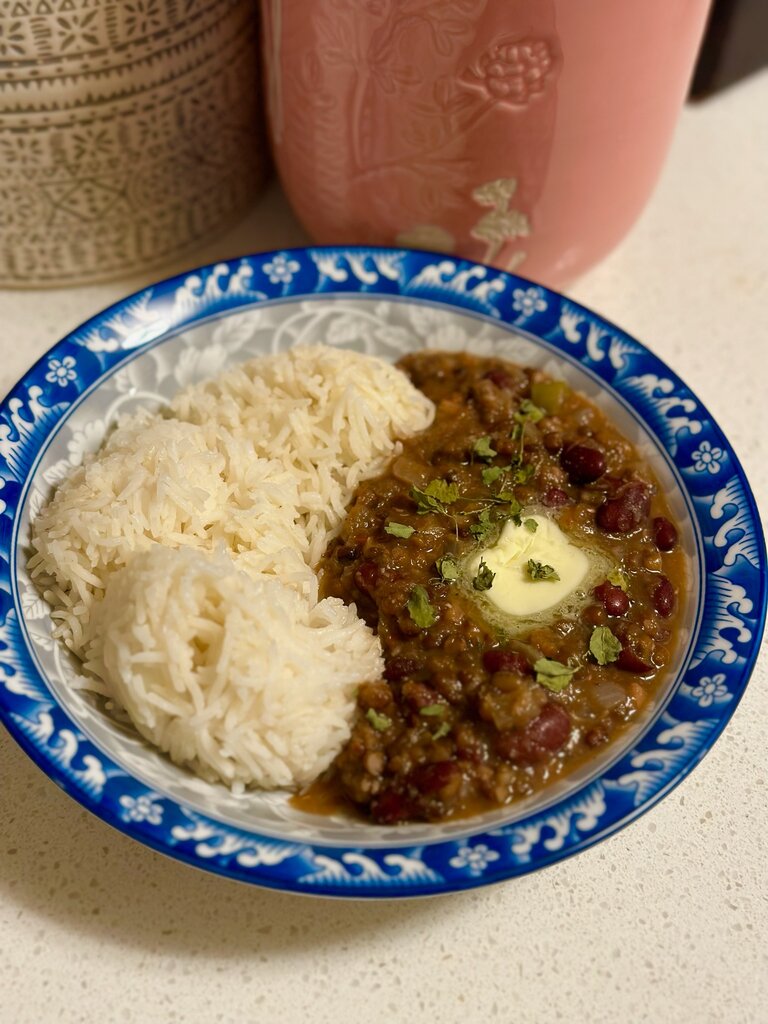
Dal Makhani
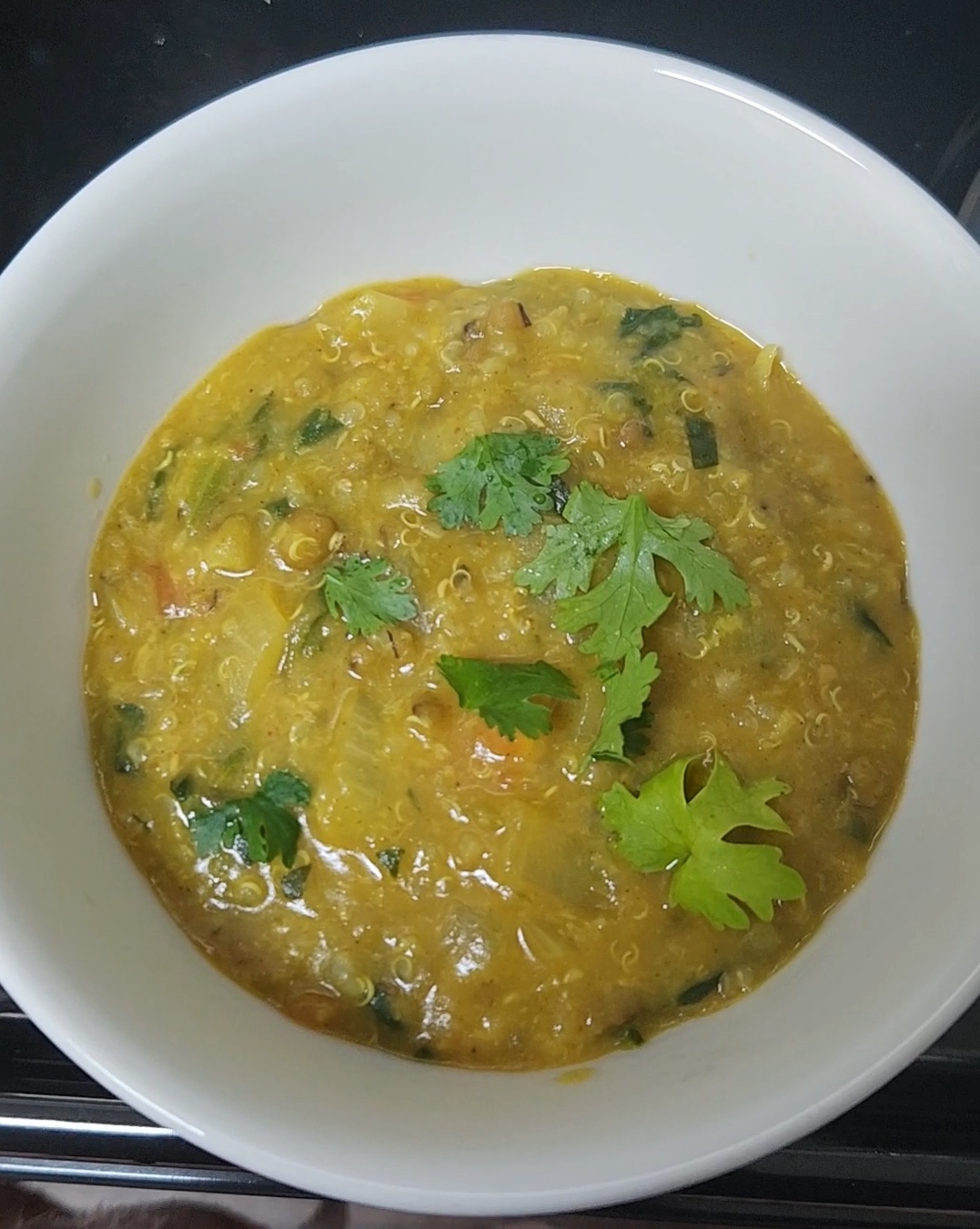
A rich and creamy North Indian lentil dish made with black lentils, kidney beans, and aromatic spices.

Discover how the Bhagavad Gita classifies food as sattvic, rajasic, and tamasic, and explore what these traditional ideas can teach us about mindful vegetarian eating.
Food is more than something we eat to satisfy hunger.
Across many cultures and traditions, food has been connected with health, emotions, spirituality, and the way we live our lives.
In the Bhagavad Gita, food is discussed in the context of the three gunas: sattva, rajas, and tamas.
These three qualities are used throughout the Gita to describe different tendencies of nature and human behavior. In Chapter 17, verses 7–10, the Gita also describes food according to these qualities.
For someone interested in vegetarianism, this provides an interesting perspective on not only what we eat, but also the qualities of the food we choose.
However, it is important to understand the original teaching accurately. The Gita does not provide a modern nutritional chart labeling every individual food as "good" or "bad." Instead, it describes broad qualities of food and their effects.
The three gunas are:
According to the Gita, these qualities influence many aspects of life, including our thoughts, actions, habits, and preferences.
Food is one of them.
What kind of effect does this food have on the body and mind?
In Bhagavad Gita 17.8, foods associated with sattva are described as those that promote life, vitality, strength, health, happiness, and satisfaction.
The verse describes food as:
This idea is often referred to as a sattvic diet.
Traditional interpretations commonly associate sattvic eating with fresh, wholesome foods such as:
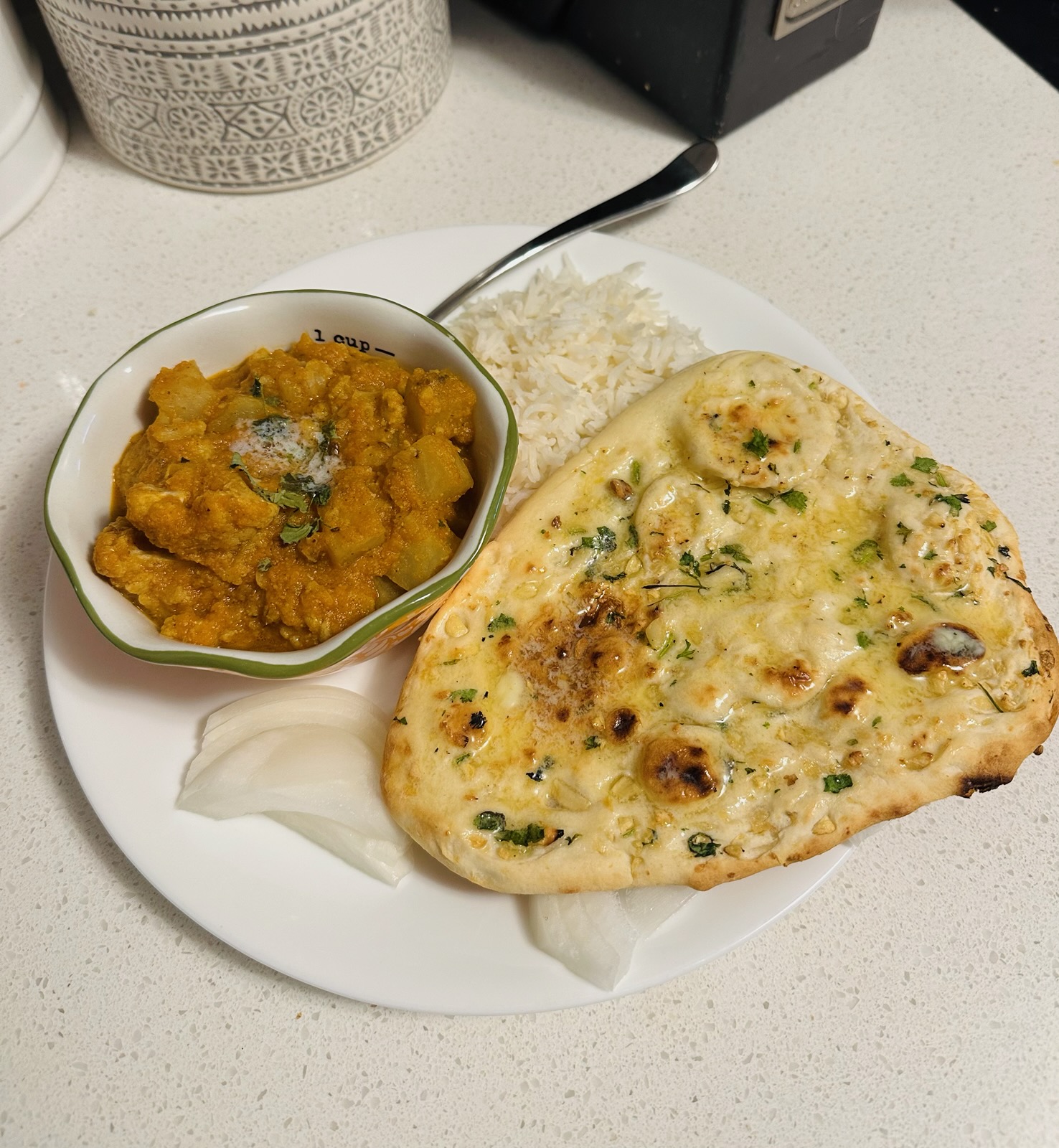
A simple meal of dal, rice, vegetables, and fresh yogurt, for example, can fit naturally into a traditional sattvic approach.
The emphasis is not necessarily on making food complicated. In fact, the opposite can be true.
Fresh ingredients, simple preparation, moderation, and balance are central ideas.
In Bhagavad Gita 17.9, foods associated with rajas are described as excessively:
The Gita associates these foods with qualities such as pain, distress, and disease.
It's important not to interpret this as saying that all spicy, sour, or salty food is unhealthy.
Indian cuisine, for example, uses chilies, spices, sour ingredients, and salt extensively.
The important distinction is excess.
A mildly spiced vegetable curry isn't necessarily the same thing as a meal designed to be overwhelmingly hot, salty, or intensely stimulating.
In Bhagavad Gita 17.10, foods associated with tamas are described as food that is:
The emphasis here is on food that has lost its freshness or is considered spoiled, decomposed, or otherwise unsuitable.
This is one area where it is important to avoid oversimplifying the Bhagavad Gita.
You will often see modern explanations claiming:
Vegetarian = sattvic
Meat = tamasic
While this idea exists within many later Hindu and yogic dietary traditions, the food classification in Bhagavad Gita 17.8–10 does not provide a simple modern food list dividing every food into vegetarian, non-vegetarian, sattvic, rajasic, or tamasic.
The verses primarily describe qualities such as freshness, nourishment, intensity, and spoilage.
Therefore, it is more accurate to say:
The Gita describes food according to its qualities and effects rather than giving us a comprehensive modern food classification chart.
The Bhagavad Gita does not specifically say in these verses, "Do not eat meat."
Instead, the food discussion focuses on the characteristics of food.
Later Hindu traditions, particularly various yogic and Ayurvedic traditions, developed more detailed ideas about which foods support a sattvic lifestyle.
Many traditional sattvic dietary systems emphasize vegetarian foods and avoid meat, fish, and eggs.
This is one reason vegetarianism has become closely associated with spiritual practice in many Hindu traditions.
But it is useful to distinguish the Gita's direct teaching from later dietary interpretations.
Dairy is another interesting example.
Traditional sattvic diets often include foods such as milk and fresh dairy products.
For many people following a lacto-vegetarian tradition, foods such as:
can be part of their diet.
At the same time, modern discussions about dairy also consider animal welfare, environmental impact, allergies, lactose intolerance, and individual health needs.
Therefore, being vegetarian doesn't require everyone to consume dairy.
The Gita's description of tamasic food includes food that is stale or has been left for too long.
This can sometimes lead to the modern statement:
"The Gita says leftovers are tamasic."
That's too simplistic.
The traditional verse refers to food that is stale, degraded, tasteless, spoiled, or no longer fresh.
Modern food preservation is very different from the food-storage practices of ancient India.
Refrigerating a properly stored meal and eating it the following day isn't necessarily equivalent to eating spoiled or decomposing food.
Food safety still matters, of course.
The broader traditional principle is to value freshness and proper preparation.
Perhaps the most interesting part of this teaching isn't the individual food categories.
It's the idea of mindful eating.
Instead of asking only:
"How many calories are in this?"
we can also ask:
These questions can complement modern nutrition without replacing it.
This is an important distinction.
The traditional concept of sattvic food is spiritual and philosophical. It should not automatically be treated as a scientific nutritional classification.
Modern nutrition considers things such as:
The healthiest diet for an individual depends on many factors.
We can appreciate the traditional principles of freshness, balance, moderation, and nourishmentwhile also using modern nutritional knowledge.
For a vegetarian, the sattvic idea can provide an interesting framework for building meals.
Imagine a simple plate:
Dal + brown rice + seasonal vegetables + fresh yogurt + fruit
You have:
You don't need complicated ingredients to create a satisfying vegetarian meal.
Some of the most nourishing meals are also the simplest.
Following a vegetarian lifestyle doesn't mean food has to be bland.
Indian cooking is a wonderful example.
Vegetables, lentils, beans, grains, herbs, and spices can create incredibly complex flavors.
Plants aren't boring. We just have to learn how to cook them well.
| Guna | Traditional Food Characteristics | General Idea |
|---|---|---|
| Sattvic | Fresh, nourishing, pleasant, wholesome | Balance and vitality |
| Rajasic | Excessively hot, spicy, salty, sour, pungent | Stimulation and restlessness |
| Tamasic | Stale, spoiled, rotten, decomposed, impure | Heaviness and dullness |
These descriptions come from the traditional framework of the Bhagavad Gita and shouldn't be confused with modern nutritional categories.
We can appreciate the wisdom of traditional food philosophies while also recognizing what modern nutrition has taught us.
A balanced vegetarian lifestyle can include a wide variety of:
And there's room for enjoyment too.
You don't have to eat perfectly every day.
A vegetarian lifestyle can include an occasional pizza, burger, dessert, or other treat.
The goal is the overall pattern, not perfection at every meal.
Perhaps the most valuable lesson we can take from the Gita is that food is part of something larger.
How we eat can reflect our values.
It can be an opportunity to practice:
Food nourishes the body, but our relationship with food can also influence the way we experience everyday life.
For someone following a vegetarian lifestyle, that can make every meal an opportunity to connect health, compassion, culture, and enjoyment.
The Bhagavad Gita's discussion of food provides a fascinating perspective on eating.
Sattvic foods are described as fresh, nourishing, and pleasant.
Rajasic foods are characterized by excessive stimulation through qualities such as heat, sourness, saltiness, and pungency.
Tamasic foods are associated with staleness, spoilage, and loss of freshness.
The teaching isn't a modern nutrition guide, and we shouldn't force ancient categories into modern dietary science.
But there is still something valuable in the underlying message:
Pay attention to what you eat, how it is prepared, how it affects you, and the intentions behind your choices.
At Fearless Vegetarian, we believe vegetarian food can be compassionate, nourishing, flavorful, and joyful.
You don't have to choose between tradition and modern nutrition.
You can learn from both.