
Cooking for Shri Krishna: When Food Becomes Bhakti
There is something deeply beautiful about cooking for someone you love. You choose the ingredients carefully, prepare them with attention, and serve the finished meal with happiness.
Now imagine doing all of that, not simply for another person, but as an offering to Shri Krishna.
In the Bhakti tradition, cooking can become much more than preparing a meal. It can become seva, loving service, and an expression of bhakti, devotion to God.
This is one of the ideas that inspires Fearless Vegetarian.
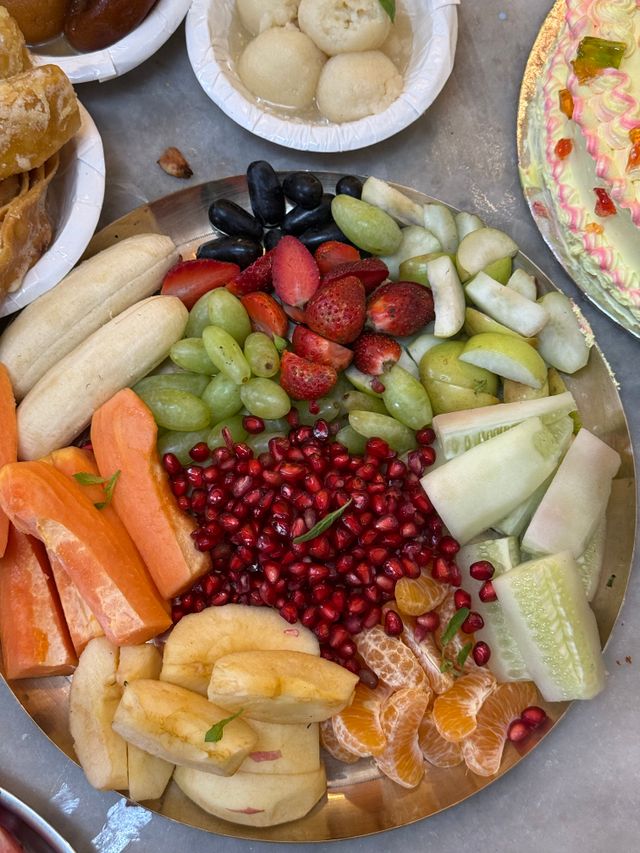
Cooking Can Be an Act of Devotion
Bhakti is often translated as devotion or loving devotion to the Divine.
But bhakti does not have to remain limited to prayer, meditation, or visiting a temple.
We can practice devotion while cleaning our home, caring for another person, helping someone in need, singing, gardening, and even cooking.
When we cook with the thought, "I am preparing this food lovingly for Shri Krishna," the kitchen itself can become a place of devotion.
The vegetables we chop, the spices we roast, the dough we knead, and the meal we carefully prepare can all become part of our spiritual practice.
The difference is not necessarily in the action. The difference is in the intention behind the action.
From Cooking to Seva
In Vaishnava traditions, food prepared for the Divine is often offered as bhog or naivedya before it is eaten.
The Sanskrit word naivedya refers to food offered to the deity.
After the offering, the food may be received as prasada, food that has been graciously offered and received as sacred.
This creates a beautiful relationship with food.
"I prepared this meal with love and offered it to Krishna."
That small change in perspective can transform an ordinary activity into seva.
Why Make Something Amazing for Krishna?
If we are going to offer food to Shri Krishna, why not make something beautiful?
Why not take the time to prepare something delicious? Why not carefully choose fresh vegetables, fragrant spices, grains, lentils, fruits, herbs, and other wholesome ingredients?
Devotional cooking does not have to mean complicated cooking.
A simple bowl of dal prepared with love can be just as meaningful as an elaborate feast.
What matters is the love, sincerity, cleanliness, attention, and devotion with which the food is prepared.
The goal isn't to impress Krishna with culinary perfection.
The goal is to express our love through what we do.
The Kitchen as a Temple
For a moment, imagine looking at your kitchen differently.
The cutting board becomes part of your seva. The sound of spices sizzling in oil becomes part of the experience.
A pot of dal slowly simmers. Vegetables roast in the oven. Rice becomes fragrant. Fresh chapatis puff on the stove.
And eventually, the meal is ready.
When prepared as an offering, these ordinary moments can become sacred.
You don't necessarily need a grand temple.
Your kitchen can become a place where devotion is practiced.
Krishna and the Simplicity of an Offering
One of the most famous verses in the Bhagavad Gita beautifully expresses the importance of offering food to Krishna.
In Bhagavad Gita 9.26, Krishna describes an offering of a leaf, flower, fruit, or water made with devotion.
The verse is important because it emphasizes bhakti, the devotion behind the offering.
It isn't the price of the ingredients that makes the offering meaningful. It isn't how expensive the dish is. It isn't whether the meal required five hours of preparation.
The heart of the offering is devotion.
A simple fruit offered with sincere love can therefore have profound spiritual significance.
And yet, there is nothing wrong with preparing an elaborate meal either. If cooking an amazing meal brings you joy and allows you to express your love for Krishna, that cooking itself can become part of your bhakti.
Cooking With Love Changes the Way We See Food
When food is viewed only as something to satisfy hunger, we can easily become disconnected from it.
We eat quickly. We consume without thinking. We waste food. We may forget where our ingredients came from.
Devotional cooking encourages another way of looking at food.
- We become more aware.
- We appreciate the ingredients.
- We become grateful for the people and nature involved in bringing food to our table.
- We cook with greater care.
- We eat with greater gratitude.
Food becomes more than calories. Food becomes an opportunity for connection and gratitude.
The Connection to a Vegetarian Lifestyle
This is where the philosophy behind Fearless Vegetarian naturally comes into the picture.
A plant-based meal can be delicious, nourishing, colorful, and deeply satisfying.
Indian cuisine, in particular, offers an incredible variety of vegetarian dishes:
- Dal
- Chana Masala
- Rajma
- Aloo Gobi
- Baingan Bharta
- Bhindi
- Vegetable Pulao
- Khichdi
- Dosas
- Idli
- Upma
- Fresh Chutneys
Vegetarian cooking does not have to feel like giving something up. It can be an invitation to discover more flavors, more spices, more vegetables, and more creativity.
And when that food is prepared as an offering, cooking can become both a culinary experience and a spiritual practice.
Vegetarian Food as Compassionate Cooking
For Fearless Vegetarian, vegetarian food is not simply a category of recipes.
It represents a way of thinking about food that places greater emphasis on compassion, awareness, and respect for life.
Different Hindu traditions and individuals have different dietary practices, and it is important not to claim that every Hindu must follow the same diet.
But for someone who chooses vegetarian or vegan living as an expression of compassion, the kitchen can become a place where those values are practiced every day.
Every meal becomes another opportunity to choose kindness.
What Does It Mean to Cook for Krishna?
Cooking for Krishna doesn't necessarily mean preparing elaborate temple-style food every day.
It can be as simple as making your morning breakfast with gratitude.
It can mean preparing a beautiful vegetable curry for your family.
It can mean making fresh chapatis instead of reaching for packaged food.
It can mean carefully preparing a favorite sweet for a festival.
It can mean offering a piece of fruit with sincere devotion.
The important question is not:
"How complicated is the food?"
It is:
"How much love am I putting into the offering?"
Cooking Without Expecting Anything in Return
One of the beautiful aspects of bhakti is the idea of offering without selfish expectation.
When we cook for ourselves, we naturally think about what we want.
- What tastes good?
- What will make me feel full?
- What am I craving?
When cooking as seva, the mindset can change.
- How can I make this beautiful?
- How can I prepare it with care?
- How can I offer it with gratitude?
The action becomes less about personal consumption and more about giving.
That is where cooking can become a spiritual practice.
From Bhog to Prasada
After food is offered to Krishna according to one's tradition and practice, it may be received as prasada.
Prasada carries the sense of grace or blessing.
The same food that was prepared in the kitchen is now experienced differently.
It has been offered. It has been received. And it can be eaten with gratitude.
This creates a beautiful cycle that can transform our relationship with food.
Fearless Vegetarian: Food With Purpose
This is the heart of what Fearless Vegetarian represents.
We want vegetarian food to be exciting.
We want it to be colorful.
We want it to be flavorful.
We want it to be satisfying.
But we also believe food can carry meaning.
A recipe can tell a story.
A spice can connect us to a culture.
A family meal can create memories.
And cooking can become an expression of love.
For those who see Shri Krishna as the center of their spiritual life, that love can naturally become an offering.
Cooking becomes seva.
Food becomes an offering.
Eating becomes gratitude.
You Don't Have to Be a Professional Cook
You don't need to be an expert chef to cook for Krishna.
Your first offering might not look perfect.
Your chapati might not be round. Your curry might have too much salt. Your rice might be slightly overcooked.
That's okay.
Bhakti isn't a cooking competition.
The beauty is in the sincerity of the effort.
When we cook with love, we are not simply following a recipe. We are practicing care, patience, attention, and gratitude.
And those qualities extend far beyond the kitchen.
A Different Way to Think About Your Next Meal
The next time you enter your kitchen, pause for a moment.
Look at the vegetables. Smell the spices. Listen to the food cooking.
Instead of thinking only about what you are going to eat, think about what you can give.
Prepare the meal with care.
Offer it to Shri Krishna according to your own devotional practice.
Then receive it with gratitude.
You may discover that something as ordinary as cooking dinner can become one of the simplest forms of daily bhakti.
The Fearless Vegetarian Philosophy
At Fearless Vegetarian, we believe vegetarian cooking should never be boring.
It should be fearless.
Fearless with spices.
Fearless with vegetables.
Fearless with tradition.
Fearless with creativity.
And, for those who choose it, fearless in allowing food to become part of their spiritual journey.
Whether you're preparing a simple dal, an elaborate festive thali, a comforting bowl of khichdi, or a colorful vegetable curry, cook it with love.
Because sometimes the most beautiful form of devotion isn't found in a complicated ritual.
Sometimes it begins with a cutting board, a handful of fresh vegetables, a few fragrant spices, and a heart full of gratitude.